
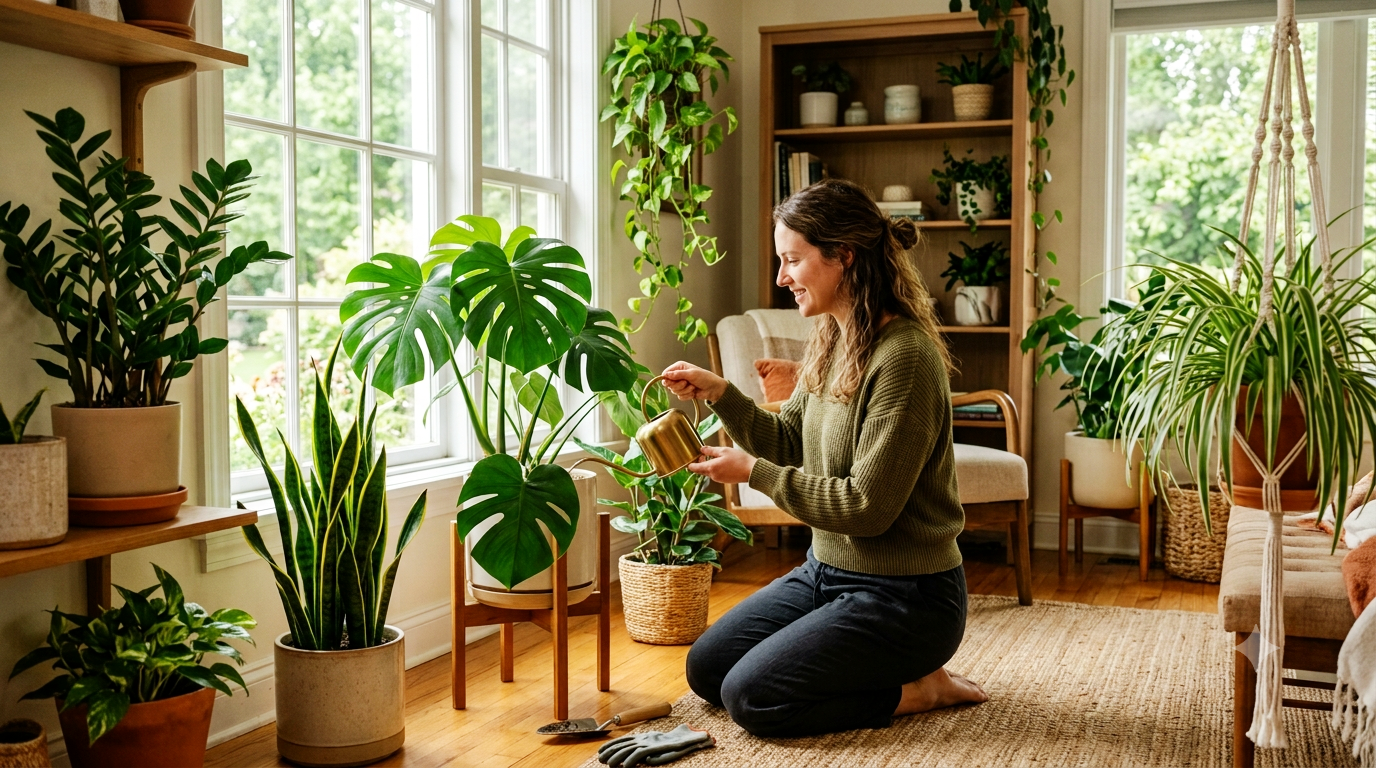
If you’ve ever brought home a beautiful houseplant only to watch it wilt, yellow, or drop leaves within weeks, you’re not alone. Most so-called “black thumbs” aren’t a lack of talent — they’re a lack of information. Indoor plant care follows a handful of predictable rules once you understand them: light, water, soil, and a little patience.
This guide walks you through everything a beginner needs to know to keep houseplants healthy, from picking the right plant for your space to diagnosing the most common problems before they become fatal.
Table of Contents
- Why Indoor Plants Are Worth Growing
- How to Choose the Right Houseplants as a Beginner
- Light: The Most Important Factor in Plant Care
- Watering: Getting the Basics Right
- Soil and Pots: Setting Your Plants Up to Succeed
- Humidity and Temperature
- Feeding Your Plants: Fertilizer Basics
- When and How to Repot
- Troubleshooting Common Houseplant Problems
- Building a Simple Weekly Care Routine
- Frequently Asked Questions
- Final Thoughts
Why Indoor Plants Are Worth Growing
Beyond decoration, houseplants offer real, tangible benefits:
- They soften a space. Greenery adds texture, color, and life to a room in a way furniture and art can’t replicate.
- They support a sense of routine and wellbeing. Caring for a living thing on a regular schedule has been linked to lower stress and a greater sense of accomplishment.
- They add a bit of humidity. Plants release moisture through their leaves, which can make indoor air feel less dry, especially during winter heating season.
- They offer a small air-quality boost. Plants absorb some airborne compounds, though the effect in a typical room is modest — you’d need a lot of plants to notice a measurable difference. Think of it as a bonus, not the main reason to grow them.
How to Choose the Right Houseplants as a Beginner
The single biggest reason beginners lose plants isn’t neglect — it’s choosing a plant that doesn’t match their space. A fern that needs high humidity will always struggle in a dry, sunny apartment, no matter how carefully you follow a watering schedule. Start with species known for tolerating a wide range of conditions and forgiving the occasional missed watering.
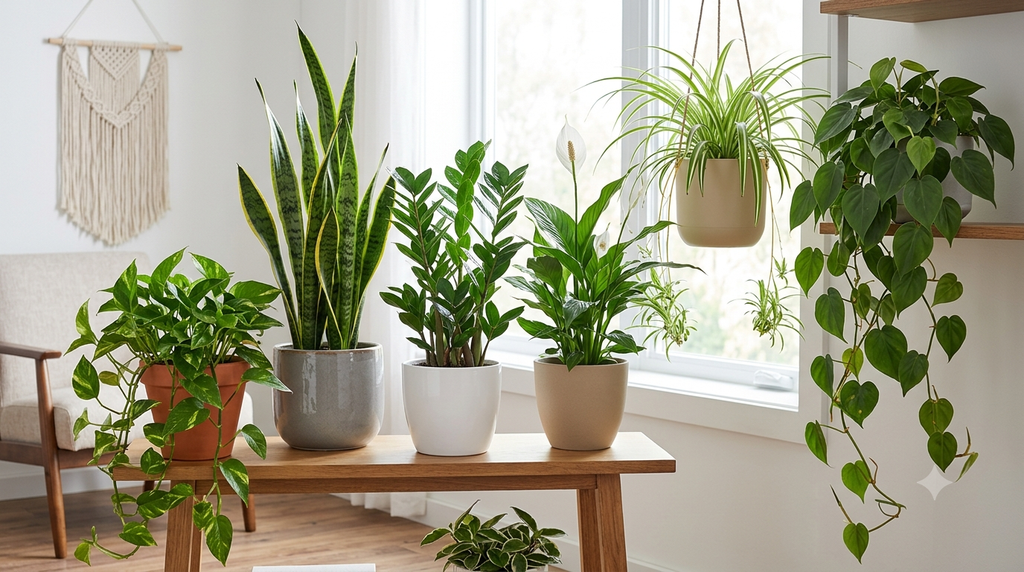
Best low-maintenance houseplants for beginners:
| Plant | Light Needs | Watering | Why It’s Beginner-Friendly |
|---|---|---|---|
| Pothos | Low to bright, indirect | Every 1–2 weeks | Tolerates neglect, grows fast, easy to propagate in water |
| Snake Plant | Low to bright | Every 2–4 weeks | Extremely drought-tolerant; thrives on being ignored |
| ZZ Plant | Low to medium, indirect | Every 2–3 weeks | Stores water in its rhizomes; forgives missed waterings |
| Spider Plant | Medium, indirect | Weekly | Fast-growing and visibly droops to signal thirst |
| Peace Lily | Low to medium, indirect | Weekly | Wilts dramatically before real damage occurs, so it “tells” you when it needs water |
| Heartleaf Philodendron | Low to bright, indirect | Weekly, let top inch dry | Forgiving vining habit, easy to propagate |
| Cast Iron Plant | Low to indirect | Every 2–3 weeks | Tolerates low light, dry air, and inconsistent care |
Pick one or two of these to start. Building confidence with a forgiving plant matters more than filling every windowsill in your first month.
Light: The Most Important Factor in Plant Care
Light drives everything else in plant care — it determines how much water a plant can actually use, how fast it grows, and how often you’ll need to feed or repot it. Get light right, and most other mistakes become forgivable.
How to Read Your Space’s Light Level
Window direction is a useful starting point (this assumes you’re in the Northern Hemisphere, which includes most readers of this guide):
- South-facing windows get the brightest, most direct light throughout the day.
- East-facing windows get gentle, direct morning sun and indirect light the rest of the day.
- West-facing windows get intense, direct afternoon sun.
- North-facing windows get the lowest, most indirect light.
If you’re unsure, try the hand shadow test: hold your hand about a foot above where the plant would sit. A sharp, well-defined shadow means bright light. A soft, fuzzy shadow means medium light. Barely any shadow means low light.
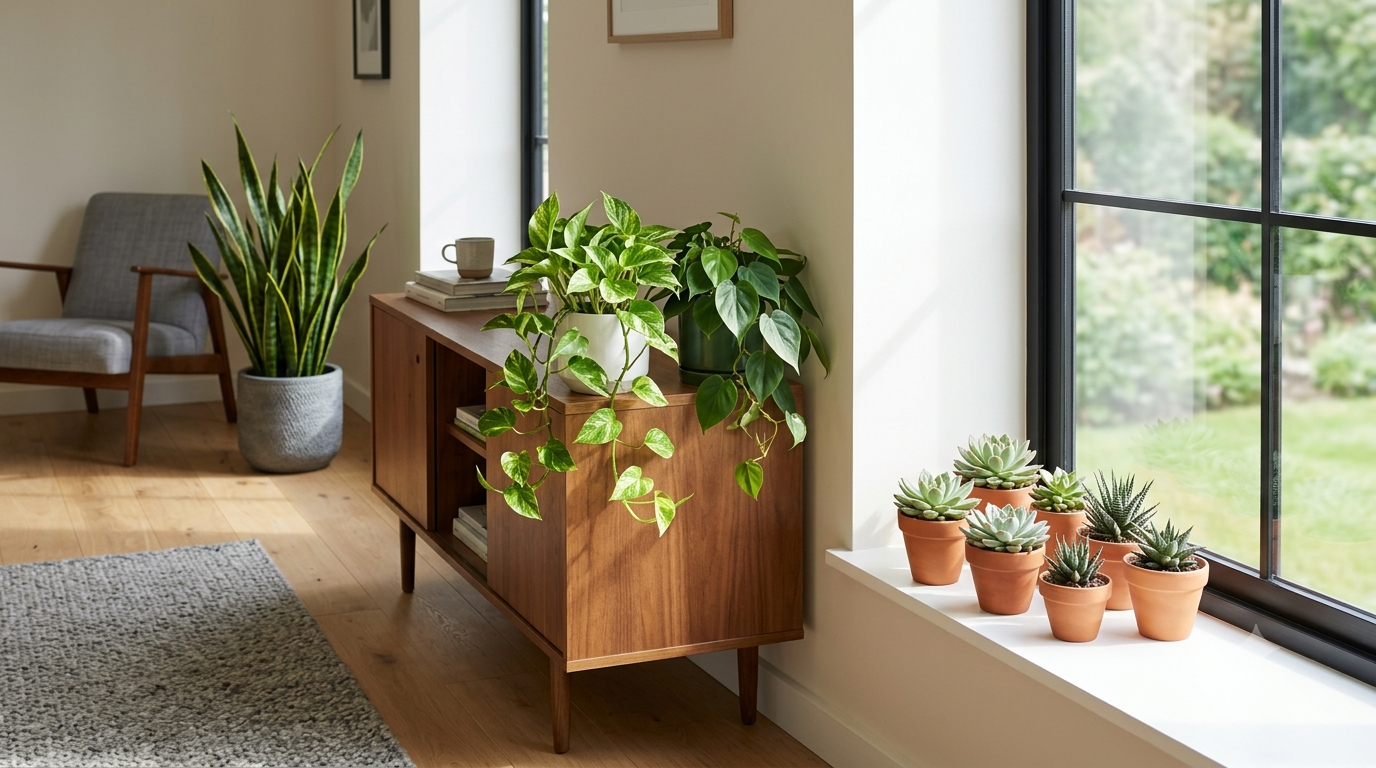
Matching Plants to Light Levels
- Low light (several feet from any window, or a north-facing room): snake plant, ZZ plant, cast iron plant, pothos.
- Medium/bright indirect light (near an east or west window, or a few feet back from a south window): philodendron, peace lily, spider plant, rubber plant — this covers most common houseplants.
- Bright direct light (unobstructed south-facing window): succulents, cacti, and most flowering plants.
One myth worth busting early: no houseplant truly thrives in a windowless room without a supplemental grow light. If natural light is limited, an affordable LED grow light solves the problem.
Watering: Getting the Basics Right
More houseplants die from overwatering than from any other single cause. It’s the classic beginner mistake — usually driven by good intentions, not neglect.
How to Tell When a Plant Needs Water
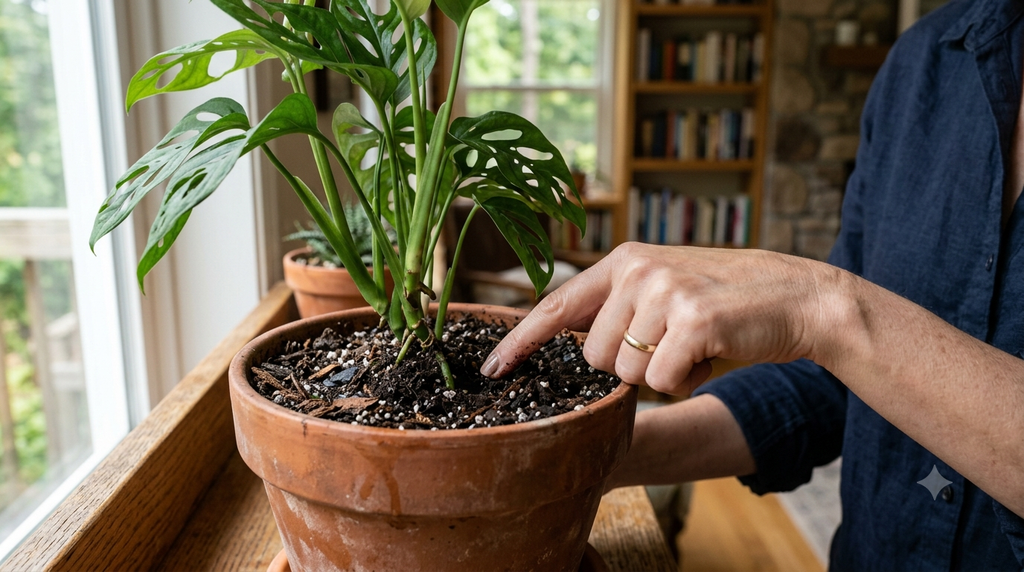
- Finger test: Insert your finger 1–2 inches into the soil. If it’s dry at that depth, it’s likely time to water (succulents want it drier still; peace lilies and ferns prefer soil that stays slightly moist).
- Weight test: A pot feels noticeably lighter once the soil has dried out.
- Visual cues: Drooping can signal thirst, but wrinkled or curling leaves can mean either under- or overwatering — always confirm with the soil, not just the leaves.
How to Water Correctly
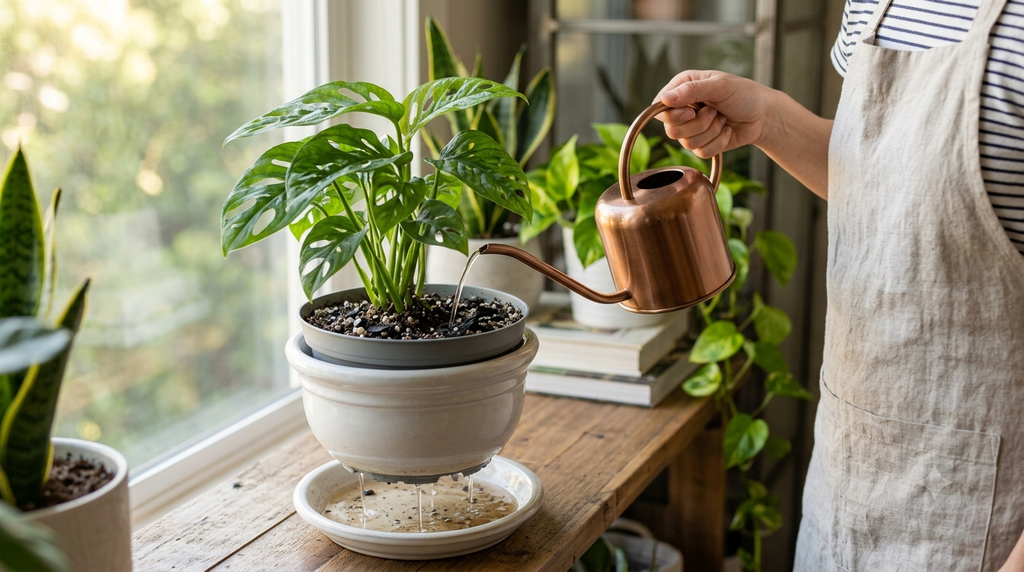
- Water thoroughly until it runs from the drainage holes — don’t just splash a little on top.
- Empty any excess water from the saucer after about 30 minutes; don’t let the pot sit in standing water.
- Use room-temperature water. Some plants, like prayer plants and calatheas, are sensitive to chlorine or fluoride — letting tap water sit out for 24 hours, or using filtered water, can help.
- Water less during winter dormancy and more during the active growing season (spring and summer).
Overwatering vs. Underwatering
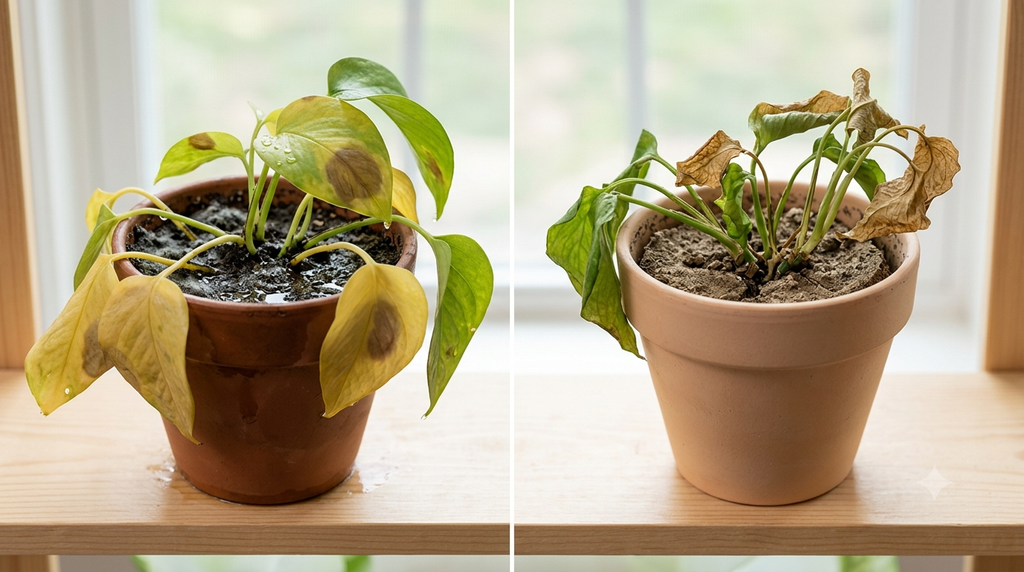
| Symptom | Overwatering | Underwatering |
|---|---|---|
| Leaf color | Yellowing, often starting with lower/older leaves | Yellow or brown with crispy edges |
| Leaf texture | Soft, mushy, sometimes translucent | Dry, crispy, curling inward |
| Soil condition | Consistently wet, may smell sour or musty | Pulls away from the pot’s edges, bone-dry throughout |
| Roots (if checked) | Brown or black, mushy, foul-smelling | Dry and brittle |
Soil and Pots: Setting Your Plants Up to Succeed
Choosing a Potting Mix
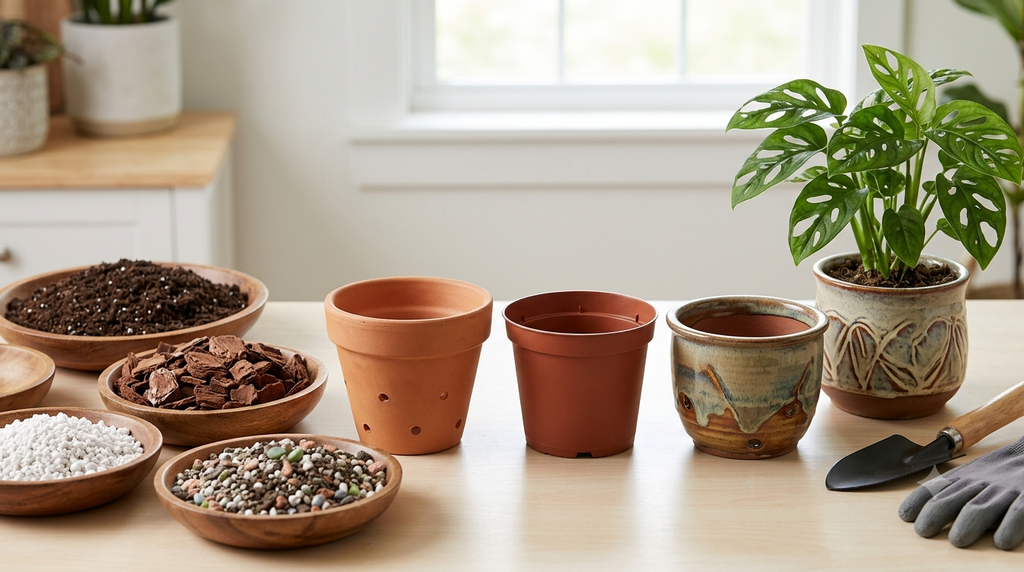
Never use garden soil indoors — it compacts, drains poorly, and can carry pests or pathogens. Instead, use a quality all-purpose potting mix formulated for containers. For certain plants, a specialty mix helps:
- Succulents and cacti need a sandy, gritty mix that drains fast.
- Orchids need a chunky, bark-based mix, not regular potting soil.
- Aroids like philodendrons and monsteras benefit from a chunky mix with added bark, perlite, or charcoal.
Picking the Right Pot
- Drainage holes are non-negotiable for beginners. If you love a pot without holes, use it as a decorative outer cover and keep the plant in its plastic nursery pot inside.
- Size matters: choose a pot only 1–2 inches larger in diameter than the current root ball. Oversized pots hold excess moisture, which is exactly what trips up beginners.
- Material matters too: terracotta is porous and dries faster (helpful if you tend to overwater); plastic retains moisture longer and is lighter; ceramic is decorative but should still have drainage.
Humidity and Temperature
Most common houseplants are comfortable at the same temperatures people are — roughly 65–75°F (18–24°C). Keep plants away from cold drafts, heating and AC vents, and direct contact with cold window glass in winter.
Many popular houseplants originated in tropical rainforests and prefer 40–60% humidity, while the average heated home sits closer to 30%. Crispy brown leaf edges are a classic sign of air that’s too dry. To raise humidity:
- Group plants together — they create a small, shared microclimate.
- Use a pebble tray filled with water beneath the pot (without letting the pot touch the water directly).
- Run a humidifier nearby for the most consistent results.
- Skip misting as a primary strategy — its effect is short-lived, and it can encourage fungal issues on fuzzy-leaved plants in low-airflow rooms.
Feeding Your Plants: Fertilizer Basics
Potting mix nutrients deplete after a few months, so regular feeding supports healthy growth once a plant is established.
- Use a balanced, water-soluble fertilizer, diluted to half strength for most houseplants.
- Feed during active growth — spring through early autumn — roughly every 4–6 weeks, depending on the product’s instructions.
- Reduce or stop feeding in fall and winter, when most plants naturally slow down.
- Don’t fertilize a brand-new plant right away. Fresh potting mix already contains nutrients, and roots need a few weeks to settle in first.
- Watch for signs of over-fertilizing: a white crust on the soil surface, browned leaf edges, or wilting despite moist soil. Flushing the soil with plain water can help correct it.
When and How to Repot
Signs it’s time to repot:
- Roots are growing out of the drainage holes.
- Water runs straight through the pot without being absorbed.
- Growth has stalled during the growing season despite good care.
- The plant looks top-heavy, or roots are visibly circling when removed from the pot.
How to repot, step by step:
- Choose a new pot 1–2 inches larger in diameter than the current one.
- Water the plant a day or two beforehand — it makes removal easier and less stressful for the roots.
- Gently loosen the root ball and tease apart any circling roots.
- Add fresh potting mix to the base of the new pot, center the plant, and fill in around the sides.
- Water thoroughly after repotting, and keep the plant out of harsh direct sun for a week or two while it adjusts.
The best time to repot is spring or early summer, at the start of active growth. Avoid repotting during dormancy unless you’re dealing with an urgent problem like root rot.
Troubleshooting Common Houseplant Problems
| Symptom | Likely Cause | What to Do |
|---|---|---|
| Yellow leaves (lower ones first) | Overwatering, or natural aging | Check soil moisture and let it dry out more; one or two lower leaves yellowing on an otherwise healthy plant is often just normal shedding |
| Brown, crispy leaf tips or edges | Low humidity, tap water sensitivity, or underwatering | Increase humidity, try filtered water, and check watering consistency |
| Drooping or wilting leaves | Either under- or overwatering | Check the soil: bone-dry means underwatered (water thoroughly); soggy means overwatered (let it dry, check for root rot) |
| Leggy growth, small new leaves, leaning toward light | Insufficient light | Move the plant closer to a light source or add a grow light |
| Sudden leaf drop | Shock from a change in environment (temperature, light, drafts) | Keep conditions stable, especially right after bringing a new plant home |
| No new growth for months | Seasonal dormancy, or a root-bound/underfed plant | Check the season first, then check the roots and feeding schedule |
Pests
The most common houseplant pests are spider mites (fine webbing and speckled leaves, common in dry air), mealybugs (white, cottony clusters in leaf joints), fungus gnats (small flies around the soil, drawn to overly wet conditions), and scale (small brown bumps on stems and leaves).
If you spot any of these, isolate the affected plant right away to stop the spread. Wipe leaves down with a damp cloth, and for larger infestations, use an insecticidal soap or neem oil spray, repeating every week or two as eggs continue to hatch. For fungus gnats specifically, letting the soil dry out more between waterings usually solves the problem at the source.
Root Rot
Root rot is caused by prolonged, overly wet soil — from overwatering, poor drainage, or both — which suffocates roots and invites fungal decay. Warning signs include mushy, brown or black roots (healthy roots are firm and pale), a foul smell from the soil, and wilting or yellowing that doesn’t improve no matter how much you water.
To fix it: remove the plant from its pot, gently rinse the roots, and trim away every mushy or blackened root with clean scissors. Repot into fresh, dry potting mix in a clean pot, and hold off on watering again until the top few inches of soil have dried out. Going forward, make sure the pot has proper drainage.
Building a Simple Weekly Care Routine
Consistency matters more than intensity. A simple routine beats an elaborate one you won’t stick to:
- 1–2 times a week: Do a quick visual check — soil moisture, leaf color, any pests.
- Weekly: Water the plants that need it, rotate pots a quarter turn for even light exposure, and wipe dust off leaves so they can absorb light better.
- Monthly: Look closely for early pest signs, and fertilize if it’s the growing season.
- Seasonally: Slow down watering and stop fertilizing in fall and winter; consider repotting in spring.
Since needs vary by species, keep a simple note — even a phone note — listing each plant’s name and its basic light and water preferences. Treating every plant the same is one of the most common beginner mistakes.
Frequently Asked Questions
How often should I water my indoor plants?
There’s no universal schedule — it depends on the plant, pot size, light, and season. Check the top 1–2 inches of soil with your finger; if it’s dry, water thoroughly. Most common houseplants need watering every 7–14 days, less often in winter.
What is the easiest houseplant to keep alive?
Snake plants and ZZ plants are widely considered the most forgiving houseplants. Both tolerate low light, irregular watering, and general neglect better than almost any other species.
Do houseplants need direct sunlight to survive?
Most popular houseplants prefer bright, indirect light rather than direct sun, which can scorch their leaves. A spot near — but not directly in — a sunny window usually works best.
Why are my plant’s leaves turning yellow?
Yellowing is most often a sign of overwatering, but it can also indicate natural aging of older leaves, insufficient light, or a nutrient deficiency. Check soil moisture first, since that’s the most common cause.
How can I tell the difference between overwatering and underwatering?
Check the soil, not just the leaves. Overwatered plants typically sit in consistently wet, heavy soil and may develop soft or mushy leaves. Underwatered plants have bone-dry soil and dry, crispy leaves.
Can indoor plants survive in a room with no windows?
Not without help. Nearly all houseplants need some natural or artificial light to photosynthesize. In a windowless room, an affordable LED grow light can keep plants healthy.
Final Thoughts
Killing a plant or two while you’re learning is normal — it’s not a sign you lack a green thumb. Once you understand how light, water, and soil work together, most of the guesswork disappears. Start with one or two forgiving plants from the list above, pay attention to how they respond, and let your collection grow along with your confidence.
Always adapt watering to your plant, light level and season rather than following a rigid calendar.